Who is Samar Automation Pvt Ltd and what do you specialize in?
−
Samar Automation Pvt. Ltd. is a Pune-based industrial entrance automation company with over 15 years of experience. We design, supply, install, and service a comprehensive range of products including High Speed Doors, Automatic Gates, Automatic Doors, Sectional Doors, Rolling Shutters, Access Control Systems, Loading Bay Equipment, and Automation Accessories. We have completed 10,000+ installations across 25+ Indian states for pharmaceutical, warehousing, manufacturing, healthcare, and commercial clients.
Do you serve Clients outside Maharashtra?
+
Yes. Samar Automation operates across 25+ states pan-India. We have installation and service teams deployed in Maharashtra, Gujarat, Delhi NCR, Karnataka, Tamil Nadu, Telangana, Andhra Pradesh, Rajasthan, Madhya Pradesh, West Bengal, and more. For remote locations, we coordinate with authorized service partners and provide remote technical support to ensure rapid response times.
Do you provide on-site consultation and site survey?
+
Yes, and it is completely free of charge. Our engineers will visit your facility to conduct a full site survey — measuring openings, assessing structural conditions, understanding your traffic requirements, and identifying any integration needs with existing access control or fire alarm systems. Based on the survey, we provide a detailed technical proposal and itemized quotation with no obligation.
What is your Annual Maintenance Contract (AMC)?
+
Our AMC program provides scheduled preventive maintenance visits (typically quarterly), priority breakdown response within 24–48 hours, genuine OEM spare parts at preferential rates, and a dedicated service contact. AMC clients also receive 24/7 emergency support. AMC programs are available for all product categories we supply and can be customized based on your site's criticality and usage frequency.
Can you service doors or gates that were no supplied by Samar Automation?
+
In many cases, yes. Our technicians are trained to service and repair a wide range of brands and product types in the industrial door and gate automation space. We can assess your existing installation and provide a service quotation. Retrofitting and motorization of manual doors and gates is also a service we routinely perform, converting legacy manual systems into fully automated, safety-compliant solutions.
What is High Speed Door?
+
A High-Speed Door is an automated industrial door designed for fast opening and closing operations to improve workflow, maintain hygiene, reduce dust, control temperature, and save energy in warehouses, factories, cold storage, and logistics facilities.
What are the benefits of installing High Speed Door?
+
High-speed doors offer several key benefits for your facility. They open and close quickly, helping to keep your operations running smoothly and efficiently. By reducing the time, the door stays open, they help maintain consistent indoor temperatures. Built to handle heavy use, high-speed doors are a reliable solution for busy industrial environments looking to improve productivity and control.
What is the opening speed of High-Speed door?
+
Our high-speed doors operate at opening speeds of 0.8 m/s to 2.0 m/s depending on the model and application. Standard industrial and warehouse variants typically run at 1.2–1.5 m/s opening speed, while our High-Speed Zipper Doors can reach up to 2.0 m/s. Closing speeds are generally set at 0.5–0.8 m/s for safety regulation compliance. Cold storage variants are optimised for speed-to-seal performance to minimise temperature loss per cycle
How many cycles per day can High speed doors handle?
+
Our high speed doors are rated for 200 to 500+ cycles per day depending on the model and configuration. Industrial and warehouse variants are engineered for continuous high-frequency operation with minimal downtime. Machine Protection doors are rated for the highest cycle frequencies, designed to keep pace with automated production equipment. We recommend enrolling in our AMC program to maintain peak performance across all usage intensities.
What is the difference between a high speed door and rolling shutter?
+
A rolling shutter is a traditional coiled metal security door used for low-frequency general access and security. A high speed door is a purpose-engineered rapid-cycle door with a flexible PVC or fabric curtain, operating at 1–2 m/s, designed for high-frequency industrial use. Key advantages of high speed doors include temperature control, energy efficiency, hygiene compliance, contamination prevention, and cycle ratings of 500+/day. Rolling shutters are suited for shops, warehouses, and storage; high speed doors are essential for pharmaceutical, cold storage, cleanroom, and high-traffic logistics environments.
Are your high speed door GMP and FDA compliant for pharmaceutical facilities?
+
Yes. Our Pharmaceutical High Speed Doors and Cleanroom High Speed Doors are designed to comply with GMP (Good Manufacturing Practice) guidelines and FDA facility requirements. Key features include: smooth, non-particle-shedding PVC curtain surfaces; stainless steel frame and hardware options; airtight edge sealing; ISO 14644-compliant operation; and control systems with data logging capability for audit trail requirements. We work directly with your QA and engineering teams to ensure documentation compliance.
How long does installation of high speed door take?
+
A standard high speed door installation typically requires 1 to 2 working days, including civil preparation (if any), mechanical installation, electrical wiring, safety sensor setup, and commissioning. Our team arrives with all required tools and hardware after a prior site survey. For pharmaceutical or cleanroom installations with stringent protocols, additional time may be allocated. We schedule installations to minimise operational disruption and ensure a clean site handover.
What happens when a High-Speed Door curtain gets damaged or de- rails?
+
Our high speed doors feature an automatic re-entry / self-repairing mechanism. If the curtain is struck and de-rails from its guide tracks — a common occurrence in busy forklift environments — the door automatically resets itself during the next opening cycle without requiring manual intervention. This dramatically reduces downtime. For curtain tears or more significant damage, we stock replacement curtains and repair kits for all models and can dispatch parts within 24–48 hours.
What type of automatic gate is best suited for an Industrial facility?
−
For industrial facilities, we most commonly recommend heavy-duty Automatic Sliding Gates or Cantilever Sliding Gates. Sliding gates on linear tracks are ideal where lateral space is available. Cantilever gates are preferred for uneven ground, areas with speed bumps or drainage channels, or where floor tracks are not feasible. For very wide openings (12+ metres), Telescopic Sliding Gates maximise the opening width while minimising the side clearance required. All industrial gate systems integrate with RFID access control, boom barriers, intercom, and ANPR cameras.
How many types of automatic gates are available?
+
Automatic gates come in various types to suit different needs and spaces. The main types include sliding gates, swing gates, telescopic gates, cantilever gates, sliding folding gates, curve gates, and retractable gates. Each offers unique features—sliding and cantilever gates save space by moving horizontally, swing gates open like traditional doors, telescopic and sliding folding gates are great for tight spaces, curve gates add a stylish design element, and retractable gates provide flexible security options. These options ensure you can find the right gate solution for your industrial or commercial facility.
What is difference between a Cantilever Gate and Standard Sliding Gate?
+
A standard sliding gate runs on a floor-mounted track that spans the full width of the gate opening. A cantilever sliding gate is suspended on cantilever rollers mounted on a fixed post and has no floor track in the opening — the gate "floats" open and closed. Cantilever gates are superior for industrial entrances where vehicles create vibration, frost or debris can interfere with floor tracks, or where the surface is uneven. They require approximately 1.5× the gate leaf width of clear space alongside the opening for the counterbalance portion.
Can Automatic gate be integrated with RFID or biometric access control?
+
Yes, absolutely. All our automatic gate systems include a control panel with dry-contact inputs that are compatible with RFID readers, biometric terminals, keypads, intercom systems, remote controls, loop detectors, and ANPR cameras. We can supply and integrate the complete access control stack, or interface with your existing system. Multi-user management, time-zone access, audit trails, and anti-tailgating functions are all available through our access control software platform.
What Safety Features do your automatic gates have?
+
Safety is built into every gate system we supply. Standard features include: photocell / infrared safety beams that stop the gate if an obstruction is detected; safety edges on the leading edge of the leaf; loop detectors in the carriageway to detect vehicles in the path; warning lights and audible alarms that activate before gate movement; an emergency stop function; and manual release for power failure. All systems are designed to comply with EN 12453 safety standards for powered pedestrian and vehicle gates.
What is Hermetically Sealed Door and where it is used?
−
A hermetically sealed door creates a complete airtight barrier when closed, achieved through an inflatable gasket or compression seal system around all four edges. These doors are mandated in operating theatres, ICUs, isolation rooms, radiology departments, and pharmaceutical sterile manufacturing zones. They prevent the transfer of airborne contaminants, pathogens, and pressure differentials between zones. Our hermetically sealed doors are certified to DIN 1946-4 (hospital ventilation standard) and are compatible with clean room pressure cascade systems. Stainless steel finishes are available for high-hygiene environments.
What Fire Rating option available for fire rated Automatic Door?
+
Our fire-rated automatic doors and rolling shutters are available in EI-60, EI-90, EI-120, and EI-240 ratings (60 to 240 minutes fire resistance). They are tested and listed to UL and CE standards, and comply with NBC (National Building Code of India) requirements for fire compartmentation. All fire doors integrate with building fire alarm systems via dry contacts and include automatic fail-safe closure on alarm activation, battery backup, and manual drop release. We provide all required certification documentation for architect and fire NOC compliance.
Are Sensor Glass Door suitable for exterior use?
+
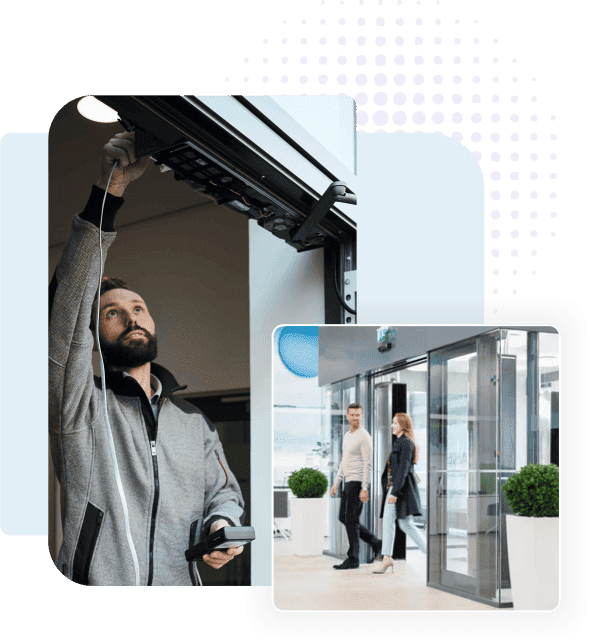
Yes. Our sensor glass automatic sliding and swing doors are available in both interior and exterior-grade configurations. Exterior models feature reinforced aluminium or stainless steel framing, weatherproof seals, tempered or laminated safety glass compliant with IS:2553, and drive units rated for IP54 or higher. Sensors are calibrated to reduce false activations from wind-blown debris or rain. We offer bi-parting, single-leaf, and telescopic configurations to suit various facade and traffic requirements.
What materials are available for rolling shutters?
−
We supply rolling shutters in a comprehensive range of materials and finishes: Mild Steel (MS) — economical and robust for industrial use; Galvanised Iron (GI) — enhanced corrosion resistance for humid or outdoor environments; Aluminium (single-skin and double-skin) — lightweight, corrosion-resistant, ideal for commercial frontages; Aluminium Powder Coated — wide colour range for aesthetic commercial applications; Polycarbonate — transparent shutters for showrooms and retail; and Fire-rated steel — for fire compartmentation in EI-60 to EI-240 ratings. All variants are available with manual spring operation or motorized (single-phase or three-phase) drives.
Can my existing manual rolling shutter be motorized?
+
In most cases, yes. Samar Automation offers motorization and retrofitting services for existing manual rolling shutters. Our engineers assess the structural condition, weight, width, and balance of your existing shutter and recommend the appropriate tubular motor, control panel, and safety devices. The shutter spring balance must be correct for motorization — we inspect and adjust this as part of the process. A motorized shutter with remote control, wall switch, and safety photocell can typically be retrofitted in one working day. This is a highly cost-effective upgrade compared to full replacement.
What types of motorized rolling shutters are available?
+
Common types include:
-
- • Industrial Motorized Rolling Shutters
- • Commercial Rolling Shutters
- • Insulated Rolling Shutters
- • Perforated Rolling Shutters
- • Galvanized Steel Rolling Shutters
- • Aluminium Rolling Shutters
- • Fire-Rated Rolling Shutters
How do I choose the right motorized rolling shutter?
+
The right shutter depends on factors such as opening size, usage frequency, security requirements, environmental conditions, and operational needs. Our experts can recommend the most suitable motorized rolling shutter solution after evaluating your site requirements.
What is an Access Control System?
−
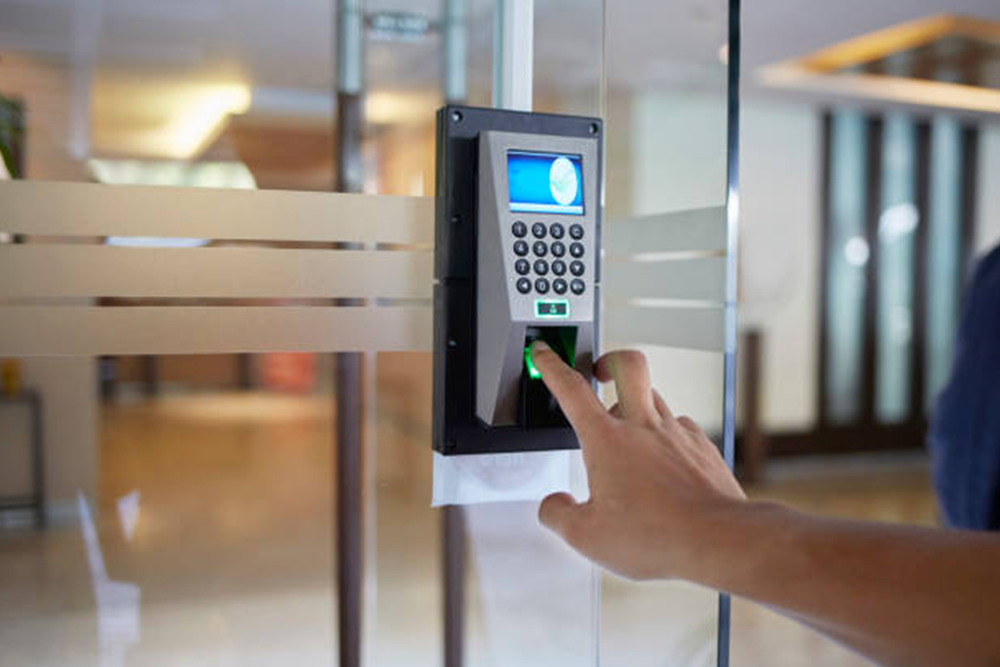
An access control system is a security solution that regulates and monitors who can enter or exit a building, room, office, factory, warehouse, or restricted area. Access can be granted through RFID cards, biometric fingerprints, facial recognition, PIN codes, mobile credentials, or a combination of these methods.
How does an access control system work?
+
An access control system verifies a user's credentials through a reader and communicates with a controller to determine whether access should be granted or denied. Every access event is recorded, providing a detailed audit trail for security and compliance purposes.
What is ANPR System and how does it work?
+
ANPR (Automatic Number Plate Recognition) uses an IP camera with AI-powered image processing software to read vehicle license plates in real time. At an industrial facility, the ANPR camera is installed at the entry and exit points. When an authorised vehicle approaches, the system reads the plate, matches it against the whitelist database, and automatically triggers the boom barrier or gate to open — completely hands-free. Blacklisted, unregistered, or unknown vehicles are flagged and denied access. The system logs every entry and exit with timestamp, image, and plate data, providing a complete audit trail for security and compliance purposes.
What is RFID System?
+
RFID (Radio Frequency Identification) is a technology that uses radio waves to automatically identify and authenticate vehicles, people, or assets without physical contact. An RFID system consists of:
- 1. RFID Tag – Installed on a vehicle windshield, access card, or asset.
- 2. RFID Reader – Reads the information stored in the RFID tag.
- 3. Controller/Software – Verifies the tag details and grants or denies access.
- 4. Access Device – Such as a boom barrier, automatic gate, turnstile, or door.
RFID technology is widely used in residential societies, industrial facilities, warehouses, corporate offices, toll plazas, and parking management systems.
How Does an RFID Boom Barrier System Work?
+
When a vehicle approaches the boom barrier:
- 1. The RFID tag attached to the vehicle enters the reader's detection range.
- 2. The RFID reader captures the tag's unique identification number.
- 3. The access control system verifies the tag against the authorized database.
- 4. If the vehicle is authorized, the controller sends a signal to the boom barrier.
- 5. The boom barrier automatically opens, allowing vehicle entry or exit.
- 6. The system records the date, time, vehicle details, and access event.
- 7. After the vehicle passes, the boom barrier automatically closes.
What is Difference between a flap barrier and a tripod turnstile?
+
A tripod turnstile uses three rotating arms to allow one-person-at-a-time passage, providing mechanical deterrence. It is robust, cost-effective, and suited for industrial plants, construction sites, and basic access control environments. A flap barrier (also called swing gate or speedgate) uses retractable flap wings that open on authentication — offering a sleek, aesthetic appearance with faster throughput and a wider passage width. Flap barriers are preferred for corporate lobbies, IT parks, metro stations, airports, and premium commercial environments where both security and presentation matter. Flap barriers typically support higher throughput (up to 40 persons/minute) versus tripod turnstiles (20–25/minute).
What Access Control Integration do your system support?
+
Our access control systems support a wide range of integration protocols: RFID (125 kHz EM and 13.56 MHz Mifare), biometric fingerprint and face recognition, QR code and barcode readers, intercom and video intercom, Wiegand 26/34 interface, RS485, TCP/IP, and RESTful API. For parking management, we integrate with parking guidance systems, payment kiosks, and ANPR cameras. Systems can be managed via desktop software or cloud platform with real-time monitoring, multi-site management, mobile app access, and HR/payroll system integration for attendance management.
What is a loading and unloading bay?
−
A designated area where goods are transferred between vehicles and facilities safely and efficiently.
Why is a loading bay important?
+
A loading and unloading bay is a designated area where goods are transferred between vehicles and a warehouse, factory, distribution center, or logistics facility. It is designed to improve operational efficiency, safety, and protection of goods during loading and unloading activities.
Why is a loading bay important for warehouses and industries?
+
A properly designed loading bay helps reduce loading times, improve worker safety, protect products from weather conditions, minimize vehicle waiting times, and increase overall logistics efficiency.
What equipment is used in a loading and unloading bay?
+
A complete loading bay solution may include:
- • Dock Levelers
- • Dock Shelters
- • Dock Seals
- • Industrial Sectional Doors
- • High-Speed Doors
- • Vehicle Restraint Systems
What is Dock Leveler and why it is required?
+
A dock leveler is a platform installed between the loading dock and the vehicle. It bridges the height gap between the truck and warehouse floor, allowing forklifts and material handling equipment to move safely and efficiently.
What is Dock Shelter and which type should I Choose?
+
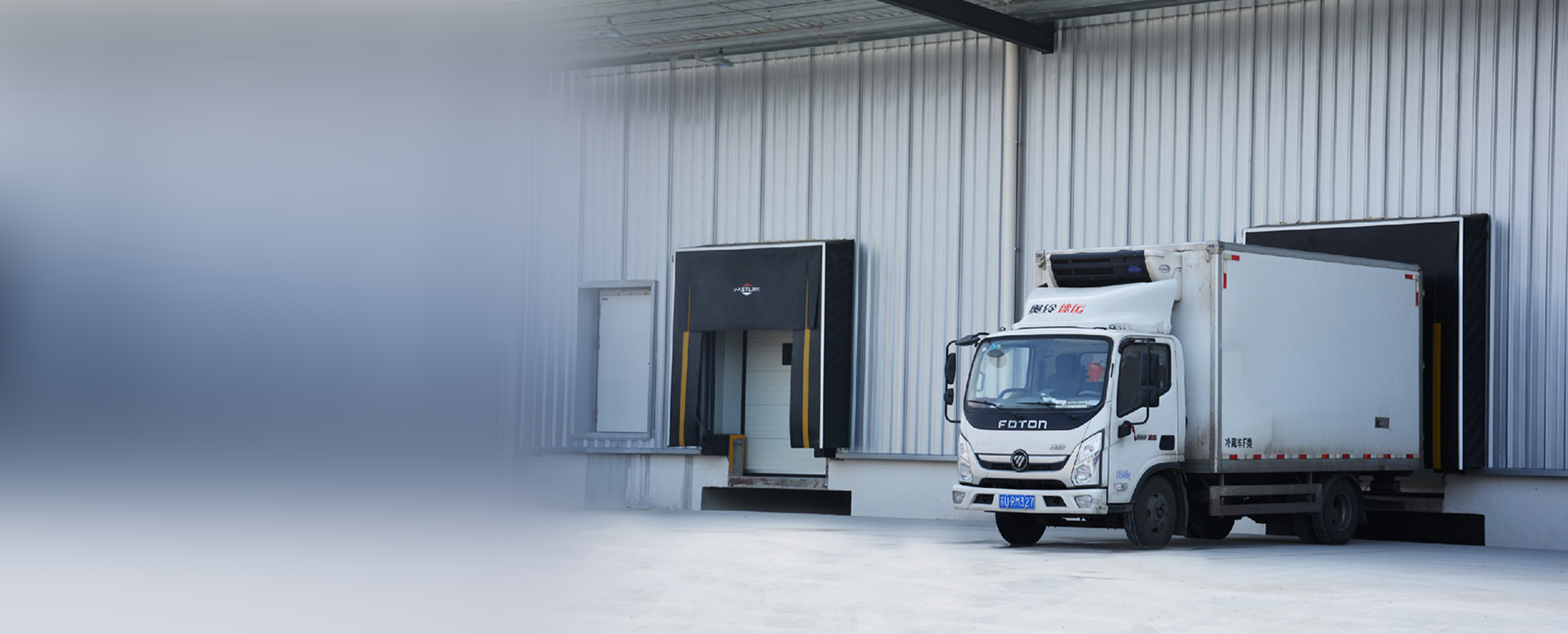
A dock shelter seals the gap between the truck body and the warehouse wall opening, preventing weather ingress, dust, insects, and temperature loss during loading. We offer three main types: Inflatable Dock Shelter — air bags inflate around the truck body for the best all-round seal, accommodating variable truck profiles and widths (recommended for cold storage and pharmaceutical facilities); Retractable Dock Shelter — spring-loaded foam-filled curtain panels retract as the truck reverses in, providing a good seal for facilities with varied truck types; Cushion Dock Shelter — fixed foam pads on sides and header for standard truck heights at budget-friendly cost. The choice depends on your truck fleet variability, climate, and the importance of temperature and contamination control at your dock.
What is the difference between a dock shelter and a dock seal?
+
A dock shelter accommodates various vehicle sizes using flexible side curtains, while a dock seal creates a tighter seal by compressing foam pads around the vehicle body. The selection depends on vehicle types and operational requirements.
What warranty do you provide on your products?
−
We provide a 2-year warranty against manufacturing defects on our products from the date of installation or commissioning. The warranty ensures reliable performance and customer peace of mind.
Are spare parts available after the warranty expires?
+
Yes. Genuine spare parts and replacement components are available even after the warranty period, ensuring long-term reliability and support for your system.
Do you offer Annual Maintenance Contracts (AMC)?
+
Yes. We offer Annual Maintenance Contracts (AMC) for automatic doors, high-speed doors, boom barriers, access control systems, loading bay equipment, and other entrance automation products to ensure smooth and trouble-free operation.